
How HR and L&D Teams Can Measure the Impact of Coaching
Coaching is a valuable investment, but HR, Talent and L&D teams increasingly need evidence of what changed. That's why I am partnering with Dr Selin Kudret to help organisations measure impact without compromising trust.
Why measuring coaching impact matters now
How do you measure the investment you make in coaching?
For many organisations, this question is becoming urgent.
Coaching is no longer just a private development benefit for senior leaders. It increasingly supports succession planning, leadership presence, communication, inclusion, performance, resilience and retention.
That includes executive coaching and specialist interventions, such as business voice coaching - my area of expertise - where the focus is on how people think, speak, lead, influence, and show up under pressure.
As coaching becomes more valuable, it also becomes more visible.

CEOs want to know whether coaching is strengthening leadership capability.
Finance Directors want to know whether the investment is justified.
HR and Learning and Development leaders want to know which interventions are making the greatest difference.
And coachees want to know something more personal: Am I developing the things that matter?

That is why I am partnering with Dr Selin Kudret, FHEA, Associate Professor of Leadership at Henley Business School, University of Reading, and Founder of Happy People at Work, to measure the impact of Make Your Mark with Susan Room® coaching.
Dr Kudret brings deep expertise in leadership, behavioural science and organisational psychology.
Together, we are helping organisations move beyond attendance and satisfaction measures to understand what has changed, demonstrate value, and strengthen the case for future learning and development investment.
“Organisations need to know whether leadership development is creating value. By combining forces, we help HR and L&D teams demonstrate what has changed, where value is being created, and how future investment can be strengthened.” Dr Selin Kudret, FHEA
The gap between coaching investment and coaching evidence
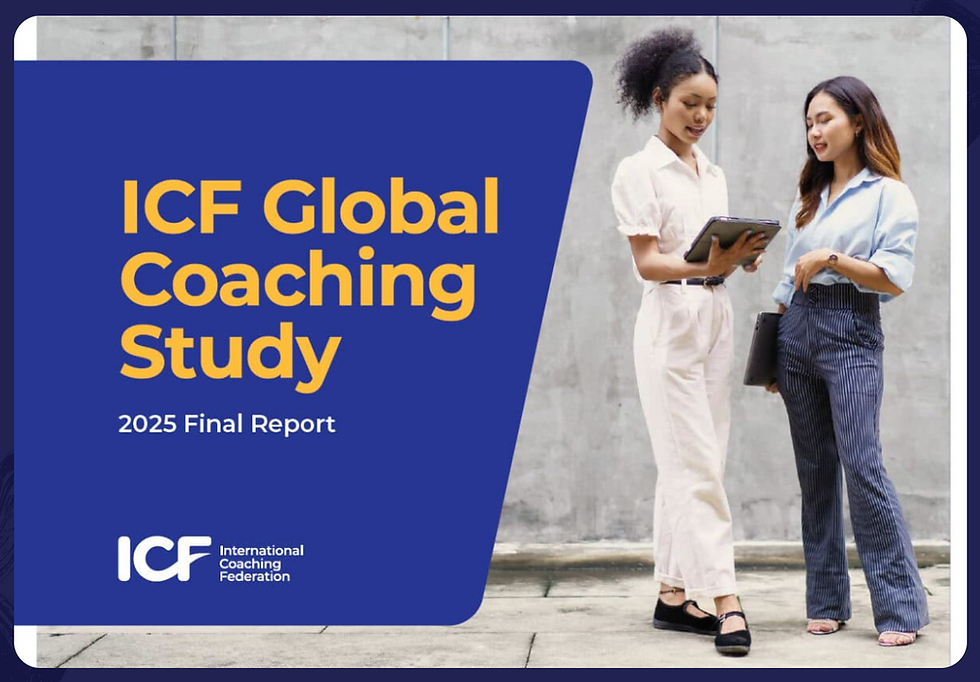
The International Coaching Federation’s 2025 Global Coaching Study reports $5.34 billion USD in global coaching industry revenue and almost 123,000 coach practitioners worldwide.
Yet many organisations still rely on relatively light-touch measures: attendance, satisfaction scores and informal feedback. Those are useful, but incomplete because they do not show what changed.
Harvard Business Publishing’s summary of ROI Institute and ATD joint research shows the scale of the gap. While 96% of CEOs said impact should be measured, only 8% of organisations currently measured impact. And while 74% said ROI should be measured, only 4% currently measured ROI.
This should matter to every organisation investing in leadership capability, communication confidence and coaching-led development.
Three principles for better coaching measurement
Good measurement does not start with the questionnaire. It starts with the purpose, connects individual development to organisational value, and protects the trust that makes coaching effective.
1. Start with purpose, not the questionnaire
Before choosing what to measure, be clear about what the coaching is meant to enable. What should participants be able to do differently? What would progress look like in real working situations? What evidence would help the organisation understand whether the coaching has made a meaningful difference?
2. Connect individual coaching outcomes to organisational goals
My work develops the practical mind–body–speech–voice skills needed to show greater mental, physical, verbal and vocal presence, especially when the stakes are high. Whatever an individual’s goals, the work is always in service of bigger organisational priorities, such as stronger leadership pipeline, improved retention, more inclusive leadership, better stakeholder communication, greater promotion readiness and stronger client or investor relationships.
3. Measure progress without damaging trust
Coaching depends on openness, honesty and psychological safety. If measurement feels punitive, intrusive or performative, it can damage the conditions that make coaching effective. Good measurement should be transparent, proportionate, confidential where needed, developmental and useful. The question is not “how do we score this person?” but “what evidence would help this person and this organisation understand and build on progress?”
What coaching research tells us
The research direction is encouraging. A 2023 meta-analysis found that workplace coaching can achieve positive organisational outcomes, while noting the need for a stronger empirical foundation. Another 2023 meta-analysis, focused on randomised controlled trials, found significant positive effects of executive coaching on outcomes including goal attainment, self-efficacy, psychological capital and resilience.
This moves the conversation beyond “does coaching feel valuable?” towards “what kind of coaching creates what kind of value, for whom, and under what conditions?”
That is a more mature, useful and business-relevant conversation.
Making coaching value visible
The future of coaching measurement is not about reducing human development to a spreadsheet.
It is about making the value of coaching more visible, more credible and more sustainable.
Done well, measurement strengthens trust. It helps organisations invest wisely, helps HR and L&D speak the language of the business, Finance Directors see evidence of value, and coachees recognise and sustain their own development.
Explore impact measurement for your coaching programme
If you're are an HR, Talent or L&D leader interested in measuring impact, business voice coaching, executive coaching or Make Your Mark with Susan Room® workshops, please contact me to discuss your needs, and how we might collaborate.

The Business Voice Coach
Sources and further reading
International Coaching Federation. 2025 ICF Global Coaching Study Executive Summary. Used for global coaching industry revenue of $5.34 billion USD and 122,974 coach practitioners worldwide.https://coachingfederation.org/resource/2025-icf-global-coaching-study-executive-summary/
Harvard Business Publishing. Measuring the Impact of Leadership Development. Used for CEO/L&D measurement gap data, including 96% saying impact should be measured vs. 8% currently measuring it, and 74% saying ROI should be measured vs. 4% currently measured ROI; source cited within the slides as ROI Institute and ATD joint research. https://www.harvardbusiness.org/wp-content/uploads/2023/06/Measuring-the-Impact-of-Leadership-Development-Slides.pdf


Comments